API integrations: connecting your systems into one ecosystem
Shop, CRM, accounting, warehouse, payments — each tool works fine on its own, but together they create chaos. API integrations make them start talking to each other.
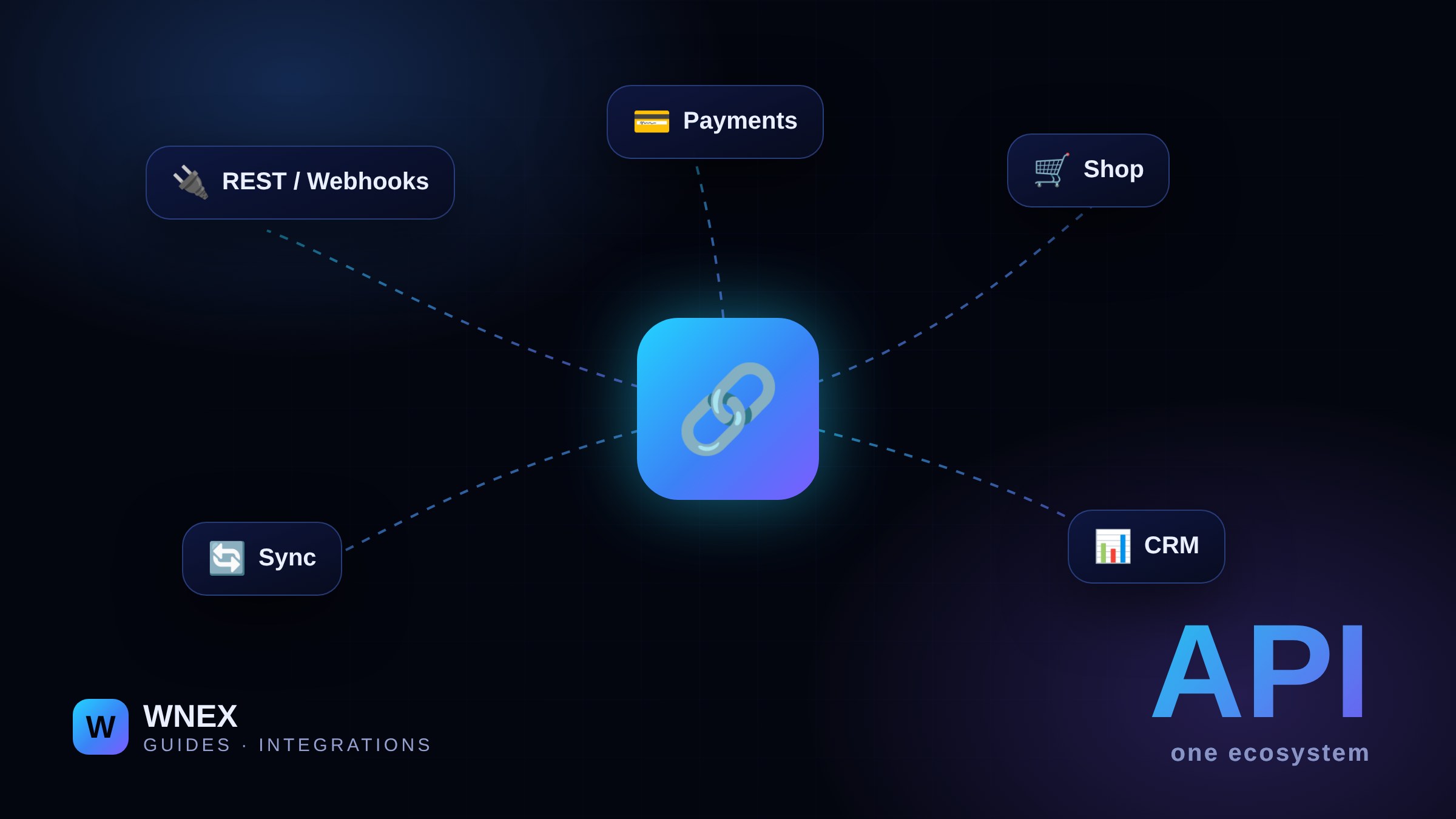
The more tools a company uses, the more time is lost moving data between them. Someone copies a shop order into the CRM, the invoice into accounting, and checks shipping status in a third system. API integrations end this manual work — they let systems exchange data automatically.
What an API actually is
An API is a "socket" through which one system exposes its data and functions to others. Thanks to it, your application can ask the shop for new orders, add a customer to the CRM or fetch an exchange rate — programmatically, without a human clicking through an interface. An integration is simply connecting those sockets so data flows where it's needed.
What you gain
- No more re-typing — data entered once appears everywhere it's needed.
- Freshness — stock levels, statuses and payments stay consistent across systems.
- Speed — processes that took hours happen in seconds.
- Fewer errors — no manual copying means no typos or omissions.
Common scenarios
The most frequent connections: shop ↔ CRM (every order creates or updates a customer), shop ↔ accounting (automatic invoices), CRM ↔ email/calendar, system ↔ payment gateway, and company ↔ external APIs (couriers, tax registries, exchange rates, data providers). It usually starts with the single most painful connection.
Webhooks — reacting to events
Integrations don't have to "poll" systems constantly. With webhooks, a system notifies you of an event ("a new order arrived") the moment it happens. The result: data is fresh instantly, with less load.
What to watch out for
A good integration is more than "moving data across". You need error handling (what happens when the other system doesn't respond), retries, security (API keys, encryption) and logging, so you can trace what happened and when. That's what separates an integration that works in a demo from one you can trust in production.
Summary
API integrations turn a collection of separate tools into one smooth ecosystem where data works for you. Start with the connection that costs you the most manual work. At WNEX we design and build fault-tolerant integrations — so they simply work.
Want to bring AI into your company?
We'll help design and launch an AI solution tailored to your processes.
Let's talk