Business process automation: where to start
Automation isn't about buying an expensive tool. It starts with finding one repetitive process that eats your team's time — and handing it to a machine.
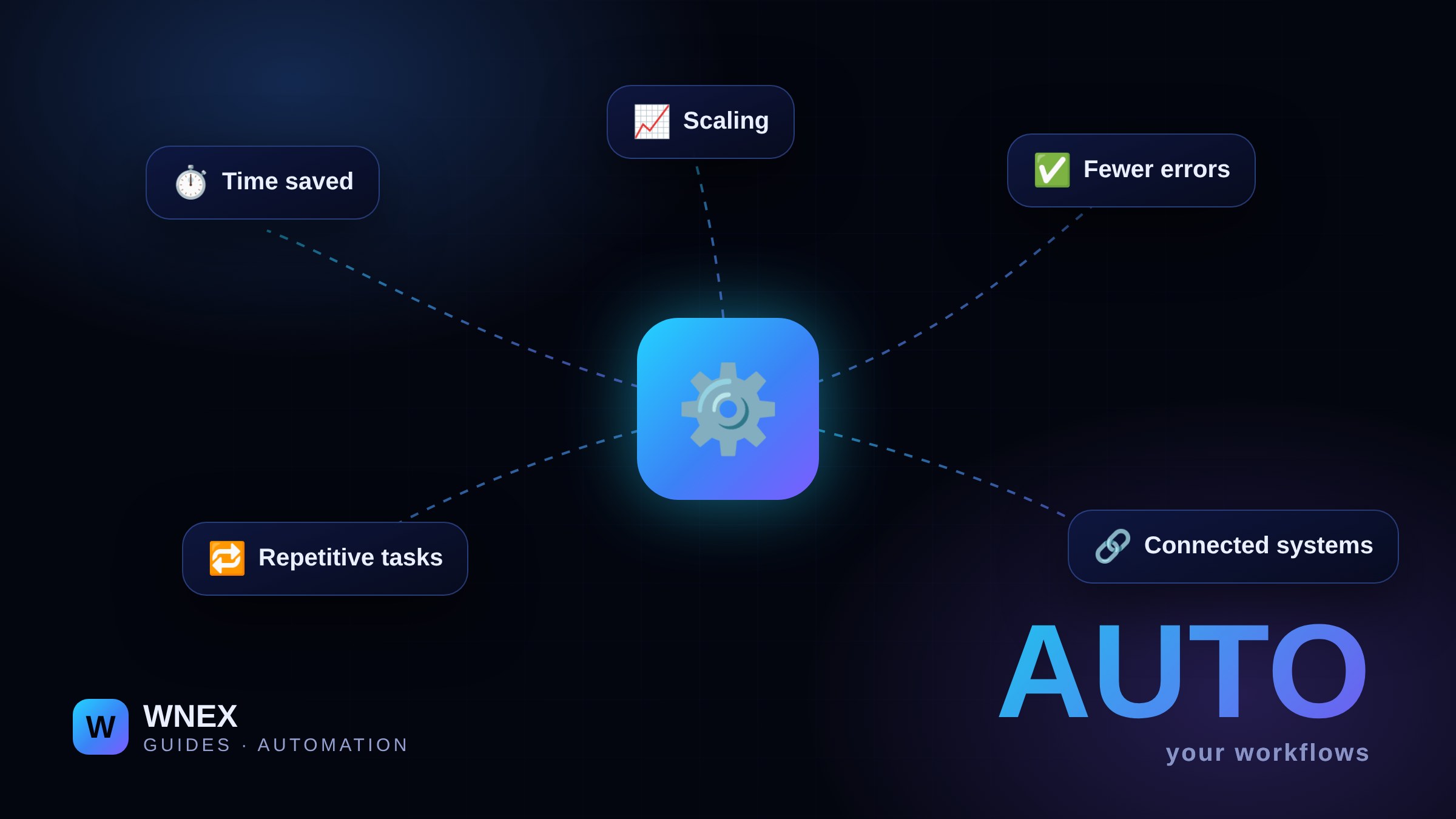
Many companies think of automation as a big "someday" project. Yet the best deployments start with something small: one task that someone in the company does by hand every week, even though they don't have to. Here's how to approach it sensibly.
Start with the process, not the tool
Don't begin with "which software should we use?" but "what slows us down the most?". Look for tasks that are repetitive, rule-based and time-consuming: copying data between systems, generating the same reports, sending standard emails, entering invoices. These are the perfect candidates for a first step.
Count what it really costs
A simple calculation is striking. If someone spends 5 hours a week manually moving data, that's over 250 hours a year — several weeks of one person's work. Automating that process usually pays for itself within a few months, and then it simply saves. This math also helps you choose what to automate first: where the saving is largest.
Connect what you already have
Most time is lost "at the seams" between systems — when data has to be moved by hand from one tool to another. Automation often comes down to connecting existing systems (shop, CRM, accounting, email) so information flows on its own. You don't need to replace your software — you just need to wire it together.
Reduce errors, not just time
Manual work costs not only time but mistakes: a typo in an amount, a skipped record, an email sent twice. An automated process performs the same steps exactly the same way every time. For many companies, consistency and no errors are worth even more than the hours saved.
Roll it out in stages
Don't automate everything at once. Pick one process, launch it, measure the effect, and only then take the next. This approach is cheaper, safer and builds the team's trust — people see that automation takes the boring work off their plate rather than complicating their lives.
Summary
Process automation isn't a revolution — it's a series of small, cost-effective improvements. Start with the one process that hurts most, calculate the saving and roll it out in stages. At WNEX we help find those processes and build automations wired into the systems you already use.
Want to bring AI into your company?
We'll help design and launch an AI solution tailored to your processes.
Let's talk